Wednesday, 5 March 2014

Ansel Adams


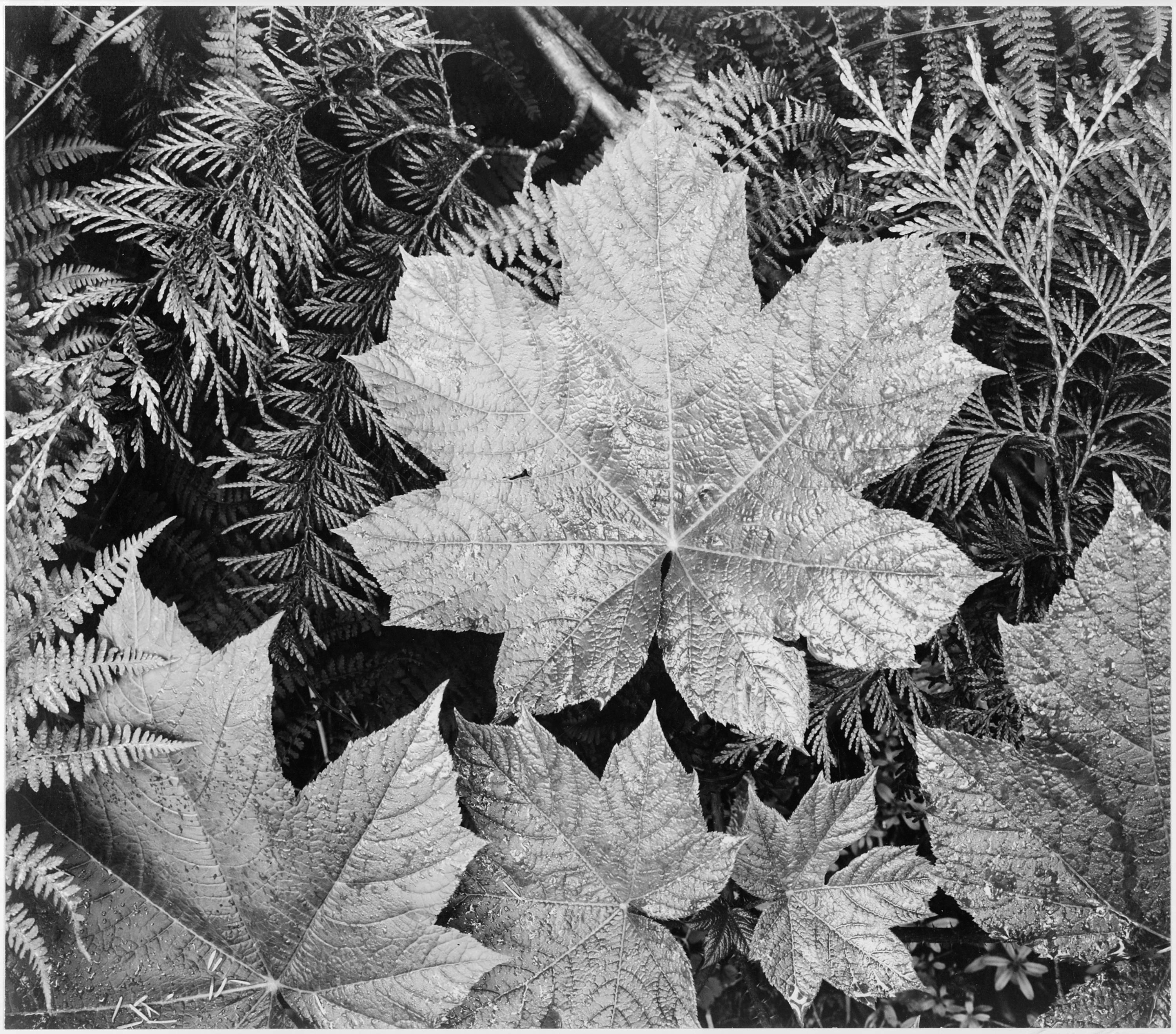
Ansel Adams is a photographer who I have known about for a number of years, he is a big inspiration of mine. I really like his work because it is about letting people see the natural beauty of the world. There was series of images that he took which were of the intention of letting people see the areas within a national park and what natural beauty was available for them to see just outside their doors.  
I really like how his photographs let people see what he sees as beautiful, it helps to open up people's minds to what can be seen as beautiful by allowing them to view others thoughts of beauty.

Kevin Newark

"My practice resonates around the themes of space, time, anxiety and displacement. In photographing discarded plastic carrier bags found in the canals of East London, I looked to find some solace for the exiled soul of the plastic bag. After short, useful lives, discarded plastic bags enter into a perpetual state of retirement, their spent utility a metaphor for our own mortal anxiety, whereas the demise of plastic is a distant, uncertain prospect. The moment of disclosure (cognition) is delayed to induce a sense of disorientation allowing the viewer to disassociate themselves from the dogma of optical faith." This is how Newark himself describes this series of photographs.


"Newark takes a different approach to the Israeli, photographing discarded carriers found in the canals of East London in a search for the soul of the object in pursuit of “transcendent possibilities”.
He’s focusing on time, anxiety, displacement and space – last time Pavilion commissioned Newark, the results were sky-high pieces of art formed by vapour from the exhaust of a jet engine as it condensed above 30,000 feet – and won the Jerwood Photography Prize in 2007." - http://www.culture24.org.uk/art/art65276

From what I understand of this series of photographs Newark has captured the formation of carrier bags in a river but ones with an alternate view, making you think that they are something that they aren't. Like with these images from a quick glance you would think that they are photographs that are taken in space due to the compositions and colours that are within the images. Which is quite interesting as it is giving the images a different meaning from what they actually are. It is like the one image has two different meanings.

Monday, 3 March 2014

Kant's theory..

Beautiful 
"This feeling of life brought about by our intuition of an indeterminate object with form is the feeling of pleasure that Kant associates with the beautiful. The feeling of pleasure we get when we encounter a beautiful object, says Kant, is nothing other than “a feeling of the free play of the powers of representation in a given representation for cognition in general.” (Kant, p. 102) When we judge an object in a merely reflecting way, we feel pleased in the awareness of the “animation of both faculties (the imagination and the understanding).” (Kant, p. 103) This animation is what makes us judge the object to be beautiful. For Kant, an object is considered beautiful if and only if it is an indeterminate self-enclosed object, which allows itself to be contemplated freely, without any constraint from empirical or ethical concepts.

Thus the beautiful, for Kant, is neither a feeling of agreeableness in the senses (the empiricist model), nor the perception of perfection in an object (the rationalist model). The beautiful, for Kant, is the result of a merely reflecting judgment which, in refusing to attribute any determinate content to the object at hand, enables a pleasurable mode of thinking, where the imagination and the understanding are in a free and harmonious relation to one another." - http://courses.washington.edu/asthetik/thiti_beautiful.html

A persons imagination and what they see of something through that imagination is what allows things to be seen as beautiful. It is not about the perception of an object or how it actually looks but more about what an individual persons mind and imagination allows them to see. This is what allows us to see and determine that things are beautiful. But everyones view of what is beautiful will be different due to what their imagination allows them to see, again no two people will be able to imagine the same thing because imagination if fueled by personality and experiences that have taken place.


Sublime
"Like the judgment of the beautiful, the judgment of the sublime, for Kant, is a type of merely reflecting judgment. As such, these two forms of judgment share one important feature with one another: they both give rise to pure aesthetic pleasure – i.e. pleasure not grounded in any determinate empirical or ethical concept. Just as the pleasure of the beautiful is the result of a certain mode of thinking, rather than any particular attribute of the intuited object, so is the pleasure of the sublime the result of a certain process of thought, which is unrelated to any objective feature of the experienced phenomenon."

"the sublime is to be found only in a phenomenon of experience that is boundless, without any discernible shape within its spatial or temporal structure"

http://courses.washington.edu/asthetik/thiti_sublime.html

In Kant's theory the sublime and the beautiful are similar in respect to how his judgments differ.
As each one person has a different view of life which is shaped by experiences that they have had what they see as sublime will be different from the next person. But the general feeling of the sublime is about things being exceptional and going above what could have ever been though to be possible. Things being great and beyond what is see as normal, the unexpected things in life.  I think what Kan't is getting at with the term sublime is things being normal but things that we don't really have to think of as being normal, the everyday things that we pay no attention too as they are familiar and a way of life, he wants to go av=o


Mathamatical Sublime

" Now that we have a general sense of what Kant means by the sublime, it is time to discuss the more specific notion of the mathematical sublime. The mathematical sublime is a feeling of the sublime which we experience when we encounter something overwhelming in size. Thus, to understand what gives rise to the feeling of the mathematical sublime, we need to understand how Kant conceives of the mind to be capable of judging sizes.
Kant makes a distinction between two ways of estimating size: aesthetically and mathematically. An aesthetic estimation of size, says Kant, is something that occurs “in mere intuition (measured by eye).” (p. 134) When we run into a tall person on our way to the office, for example, we judge the person to be tall, not through the use of a ruler, but through what we consider to be the norm of a person’s size – i.e. through “the average magnitude of the people known to us.” (p. 133) An aesthetic estimation of size is thus something that we do every day, intuitively, without any attempt at calculation.

A mathematical estimation of size, on the other hand, is something that requires us to calculate (i.e. brings things into numerical relations with one another). When we want to judge whether a person’s height has broken the world record, for example, we do not simply eyeball the person’s height: we measure the person’s height quantitatively, “by means of numerical concepts.” (p. 134) Thus, in a mathematical estimation of size, instead of using the norms of intuition as our guide, we use the norms of reason (i.e. numerical relation) for our estimation. A mathematical estimation of size is thus an estimation of size based on quantitative reasoning, which requires us to compare the size of things based on their numerical relations to one another, rather than judging merely on the basis of our intuitive norms"  - http://courses.washington.edu/asthetik/thiti_mathematical.html  

Mathematical sublime differs from the sublime as it needs to be thought about more, it goes above the normal every day things that are seen and when we have to think about certain things and try and calculate their significance and what they mean.

Wednesday, 26 February 2014

Tony Howell

"Tony Howell is one of England's finest landscape photographers. A professional photographer with over 35 years experience, he is based in Somerset, near Bristol. His style is instantly recognisable - simple, uncluttered compositions and an overall sense of peace and stillness borne out of his deep love of the natural world." - http://www.tonyhowell.co.uk/about.htm

Through researching different photographer I came across Tony Howells work, before I read anything about the photographer himself I saw some of his photographs and I was instantly grabbed and dragged in by the different colours and compositions that are within his photographs. 

His work is well known and he has done work for publications such as National Geographic and The BBC.

Here is a statement from Howell that I read on his website

"When I started using a camera in 1977, I really started seeing the world properly for the first time.
I take photographs because I'm interested in anything beautiful, but particularly the natural world. I just love nature; I love the creative process, and tuning in to my own interpretation of the subject; trying to express my feelings about what I see. I hope to get my message across in my images: - peace and joy through beauty. Concentrate on beauty and it infuses your life. It can be a spiritual experience that lifts me higher; mostly when I'm photographing, but sometimes when I make a great print and relive being there. Taking photographs makes me seek out beauty, which then uplifts me. I'm not just doing it for myself; I've received many thank you messages from people over the years. My work has uplifted them too, and many say it inspires them. This is surely the greatest compliment, and spurs me on to improve my skills and attempt to capture more fine glimpses of this fascinating, fragile world." - http://www.tonyhowell.co.uk/about.htm

< Back 

< Back

< Back 

< Back

< Back 

< Back

< Back 

< Back 

< Back 

< Back

< Back 

Again this photographers work relates to my own in a different way, with the abstract images showing different compositions and formations from natural things.


Ryan Bush


Ryan Bush is an abstract photographer, the photograph above is from a series titled 'Colour' and is one that was undertaken from the year 2005 through to 2011 with him capturing and adding new photographs to the series. All of the images in this series can be seen here : http://www.ryanbushphotography.com/portfolio.php?dir=color&title=Color,%202005-2011
One of the reasons that I like this series of photographs so much is how they are very much nature based images focusing on the natural beauty of wildlife and such. Showing the different formations and compositions that are natural and beautiful. He uses macro photography to get the small detail that you may not really notice to bring out the detail and beauty of things - which, is something that I intend to do within this project.

I read this statement from Bush himself which was on his website under 'Artist Statement'
"
Mysteries are hidden everywhere around us in plain sight, in bare tree branches and simple leaves, electric wires, manhole covers, shadows on stairs, buildings and architecture, even in our own handwriting. Some of these wonders we take for granted, while others we may never have really seen. For me, abstract photography is a bridge that connects our everyday world with imaginary worlds, places that are no less real just because we can't touch them. We must be content with seeing them through the eye of abstraction.

I am drawn to images that carry a certain meditative quality. Part of this is achieved by using a sparse language of geometrical shapes, lines, and rhythms. Furthermore, I often use a narrow tonal range, so that the images are either overall dark or overall light. By abstracting away from the literal subject matter, I hope to leave behind the question "What is it?", and let our associations to come to the forefront. My goal is for the photographs to have a feeling of meditative simplicity, so they are images not from our everyday, mundane world of hustle and bustle, but instead from the more symbolic and archetypal world of our imagination."

In a way this is exactly what I am getting at with this project by trying to get people to see the things that go by unseen and don't get noticed - but are things that should be see and appreciated as they are vital to out everyday lives and wellbeing. 

I have looked through a number of the different series' of photographs on his website and I am really draw to his work, his photographs are really intriguing and like he has stated he want to raise questions and get people wondering what they are seeing, he has definitely done this with some of his images which I really like and it makes them even more interesting as they have a case of mystery against them.

Tuesday, 11 February 2014

first few shots...

The test shots that i submitted with my proposal -


Since submitting these test shots i haven't really taken that many photo but i have recently started to snap more of what i am intrigued by and what i see as beautiful, here are some of the photographs that i have taken over the past few weeks.


All of these photographs have been edited and put through Instagram, this is simply just a way of me experimenting and seeing the different types of outcomes i can get. there is also a common theme of light throughout these images - something that i have mentioned that i feel is important to an image.